Essay
Art and Theophany
We are experiencing a gradual subjugation of human creative faculties to intelligences artificial and alien to Art’s historically contingent operations of cultural creation. This influence comes from something I am calling Theophany,1 a type of transmission influenced by another thing I have named the Unseen Intelligence. Art making is being influenced by intelligences whose operations remain opaque to ordinary perception, bent toward the accumulation of attention and content, for purposes unknown to the very participants incentivized to comply.
The result is that Art has become stagnant. The Art Market continues to chug along free from any challenging narratives. The apparatus is too big to simply stop, requiring content to fuel its continued existence, content which adheres to unwritten rules decided by outside forces. The incentive structure has changed to encourage a type of thetic reality. This reality is predetermined, asserted into place by a system that benefits from itself and circulated as though the manufactured arrangement were a natural one. While it’s obvious to many that technological changes are to blame, little has been done to characterize their structure. This essay, drawn from years of personal notes, is an attempt to make that structure visible.
The Turn of Transmission
Before the widespread digital transmission of artwork the mysteries of art making operated according to principles comprehensible to artists and viewers alike. Artists made work in private studios culminating in public exhibitions for interested audiences. Cultural influence relied on a Universal Gossip: an intricate network of correspondence between dealers, curators, artists, viewers and collectors. An unknown artist could break through with a show, and as a result dealers and curators would point the right support toward the work. This functioned through gossip and its more refined form, criticism, and formed meritocratic conspiracies, allowing for the circulation of reputation and accumulation of cultural authority among artists. Often an artist’s name is repeated by the right people, and interest grows before the artist yet exists in a solid and verifiable way. This conspiracy, while imperfect, nonetheless operated according to recognizably human principles.
The evolution of this system began with the capacity to reproduce and distribute images of artworks through the Internet and social media. Artworks could reach non-local audiences with unprecedented speed and scope. These new transmission systems operated according to technological principles alien to all previous cultural understanding. Written over a decade ago, Michael Sanchez’s seminal essay Art and Transmission, points toward early evidence of this, suggesting:
“What had been a process of legitimation, attributable to particular institutions or critical bodies, now becomes a process of simple visibility, attributable to the media apparatus itself.”
— Michael Sanchez, 2011: Art and Transmission, Artforum, Summer 2013
The influence of the algorithm began to upend the previously human Universal Gossip, by introducing non-human intelligences as a mediating force. Sanchez’s essay emerged from a time when these processes were still curated aggregations made by human editors, on blogs like Contemporary Art Daily. Social media feeds were still chronological, ordered by the time things were posted, and “for you” style recommendation feeds had not yet become ubiquitous. The distance from that time is so great that many new social media apps being made today are nostalgic for this human-centric curation.
The Unseen Intelligence
The previous decade of Art can be interpreted as a concentrated effort to efficiently digitize and transmit Art. These years, in hindsight, were a time for artists to inadvertently probe the efficacy of techniques in a new landscape of automated consumption, and, as a consequence, to serve as training data for an emerging Unseen Intelligence.
All cultural operations have always involved intelligences beyond the direct perception of ordinary participants. We can count the Universal Gossip as one such networked intelligence; the influence of patrons, the machinations of dealers, the subtle operations of institutional power, and their relationship to current events all represent forms of Unseen Intelligence that have long shaped art production. The Unseen Intelligence is thus the totality of networked influence that operates outside principles of human logic, and specifically for our purposes here, outside the direct preoccupations of the art-world. These artificial operators make determinations about cultural circulation based on logic performed upon quantified data rather than direct human aesthetic judgment, using algorithms designed by people we can assume have questionable understandings of art. The Unseen Intelligence, composed of a partnership between non-human and non-art functions, has supplanted the meritocratic process of Universal Gossip.
Theophany
Exhibitions have often been the basis for Studio Art practices. With the advent of social media and the internet, the transmission of art documentation became the new endgame of an artist’s work. If the last decade was marked by transmission being the major technology influencing the production of art, the next decade will be influenced by transmission coupled with the guidance of the Unseen Intelligence: Theophany.
Theophany is the miraculously contingent transmission that is curated “somehow” and “just for you,” based on unknowable metrics. Content appears as if delivered by omniscient forces that understand individual desires better than audiences themselves. What Sanchez once attributed to a “media apparatus” has developed into an intelligence apparatus. Theophany is distinguished from previous forms by operating at scales and speeds no longer comprehensible to human perception, remaining schematically opaque to the participants whose lives it influences, and optimized for objectives entirely orthogonal to cultural values.
In Theophanic systems, criteria of success don’t exist before the operations are run. Success is discovered. A simple illustration is rudimentary A/B testing, where two options are given to random selections of end users to discover the more attention-grabbing result, for instance, two phrasings of a New York Times headline. The test operates under the condition that outcomes are unknown prior to observation; the logic of choice therefore emerges from evidence rather than prescription. An unknown emergent process, guaranteeing consistency only within its own criteria. While the reality of content algorithms is more complex, the entire apparatus is epistemologically similar. Success comes from discovering aligning strategies which satisfy Theophany’s conditions: something nobody chose, and nobody can inspect, that shifts as the system keeps learning, so that artists can’t generalize from their own success. In terms of Art specifically, as opposed to general cultural media, the system determining which results are “best” is poorly aligned with conclusions previously arrived at by smaller networks of gossip. Gossip operates through reasons, critical judgments can be articulated, argued with, and rejected. Theophany only produces outcomes. Visibility or invisibility, with the absence of reasoning. Gossip is discourse, whereas Theophany is an oracle, and oracles don’t explain themselves. This leads to a form of cultural precarity that is only resolved by attempting to appease the Theophanic selection process. The artist becomes trapped in the necessity of believing in the merit-based nature of their success while remaining unconscious of the exact nature of the artificial systems that mediate their cultural visibility.
Three Successful Modes
Within the period leading up to the emergence of Theophany, several successful approaches led to the reinforcement and training of the Unseen Intelligence. These modes happened in sequence overlapping and crossing mediums, each optimizing a different axis of artistic production.
The Bundling of Information-Essence
Artists discovered methods for packaging conceptual content into material forms optimized for rapid transmission. These works functioned as vessels for pre-digested intellectual content, allowing theoretical materials to be absorbed through brief visual encounters backed up with simple textual corroboration. These methods were common across post-internet art and process-based abstraction popular in the 2010s.
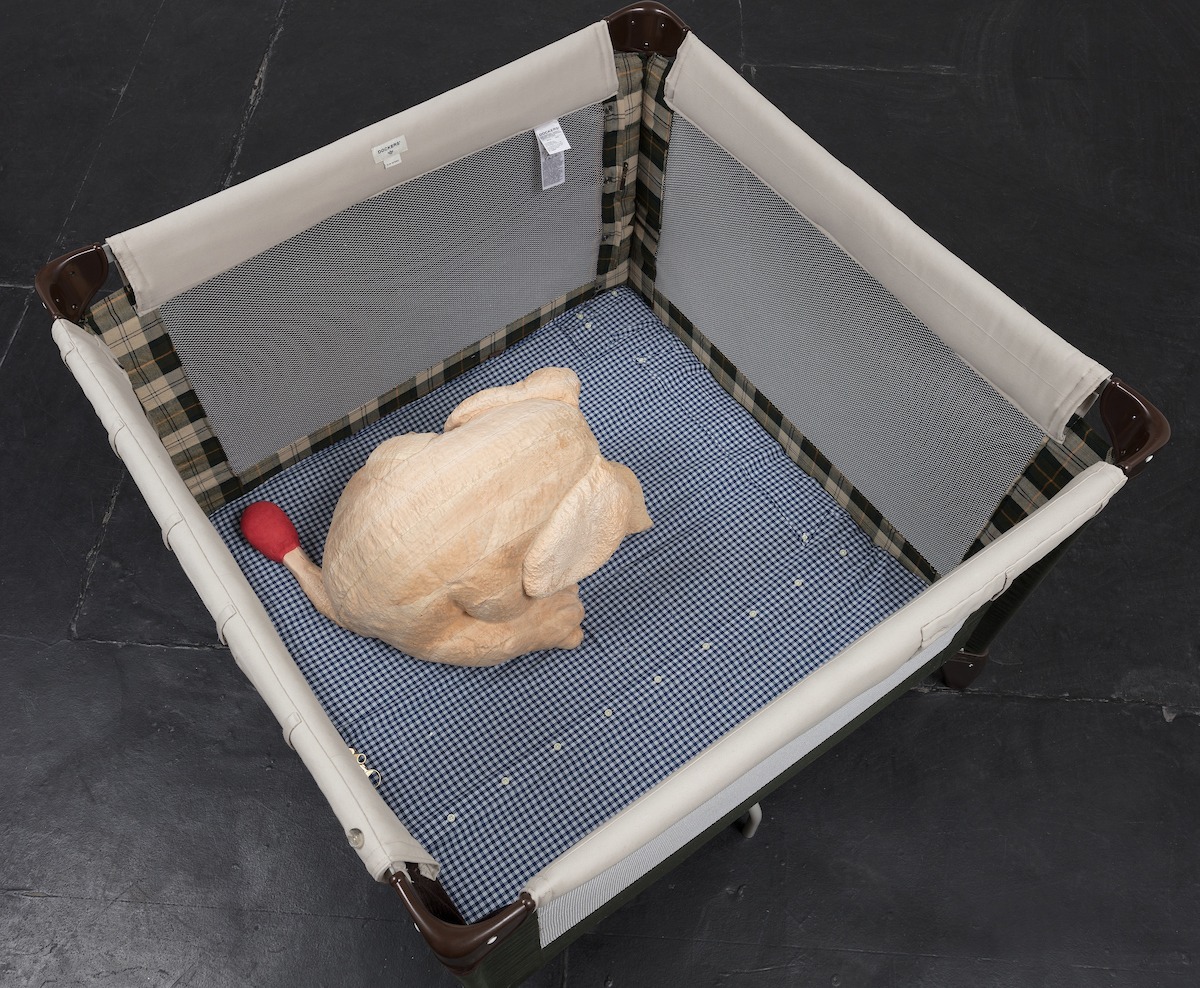
Josh Kline, one prominent example, created a sculptural practice in which each assemblage component of his work directly corresponded to a distinct data point. Steve Bannon, Republican self-immolation, and so on, are contained not only as the content of the work but as readable information. This kind of art emerged as artists began exhibiting online-centric ideas in real life, and required the “making real” of ideas as material, by utilizing sculptural assemblages that functioned as three-dimensional arguments.
The process-based abstraction artists also sought gestures that were reproducible and easily explained: the painting is left out in the rain, the brushstroke is made by a fire extinguisher. These operations proved highly effective because they satisfied the Unseen Intelligence’s preference for content that could be quickly processed and categorized. The works could be “read” completely through their digital reproduction, making them machine-readable by reducing conceptual information to data. This type of work enjoyed an entire market cycle, spanning a period in which social media like Instagram became ubiquitous as a professional platform. This work was ahead of its time in its attempts to appeal to an Unseen Intelligence that had not yet fully formed. Influencers, and the general idea of generating content for the algorithm, were approaches just beginning to emerge.
The Generation of Experiential Spectacle
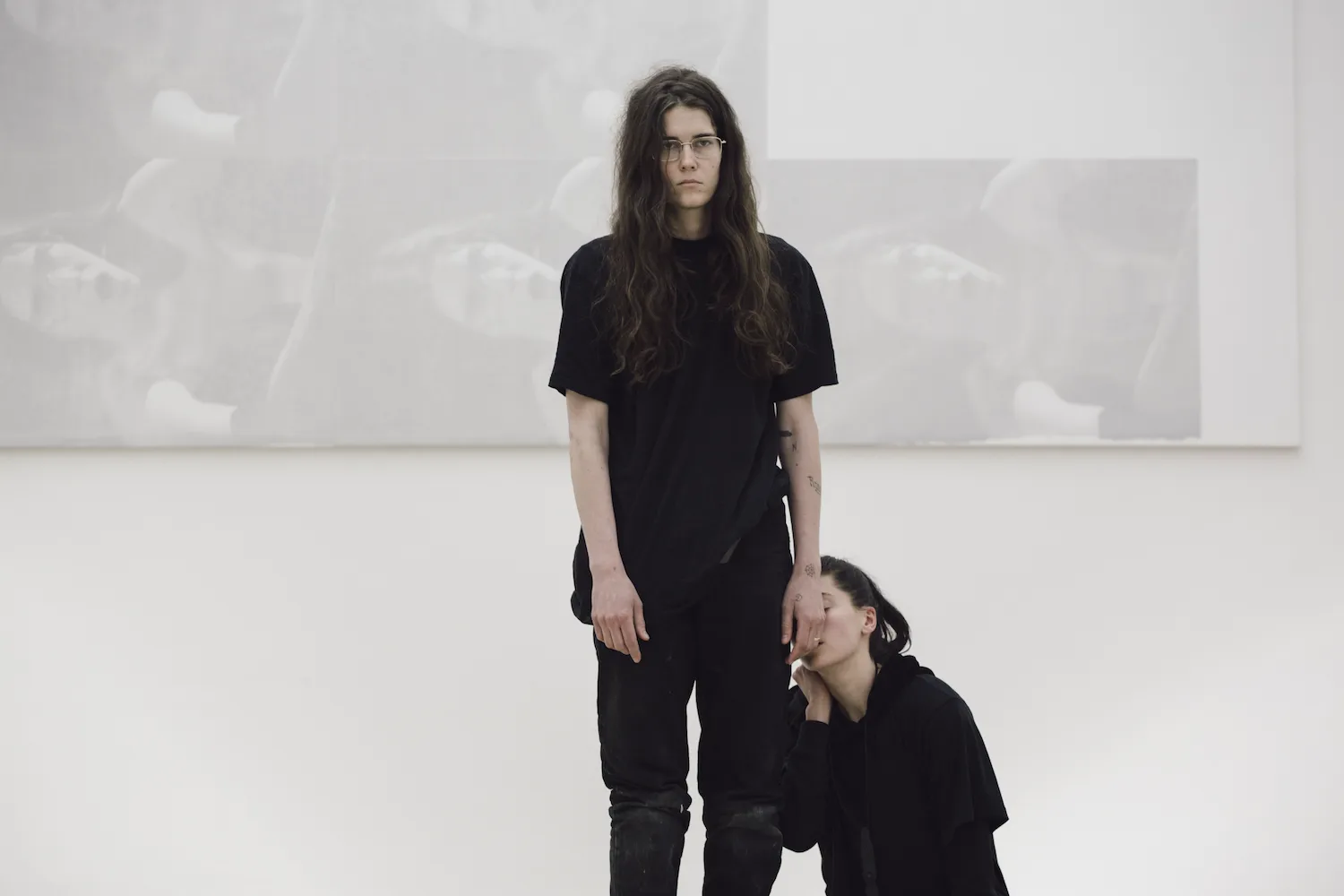
As “content” became a driving factor of transmission online, art-making attempted to capture similar attention. Artists working in this mode designed performances that functioned as content generation, mirroring another transmission vector in the wider social media sphere: viral content. Anne Imhof, for example, was able to repurpose the tested spectacles of nightclubs and fashion runways, which exist to generate thousands of social media images, by giving them an art sheen. This type of work is seen elsewhere, in Young Boy Dancing Group’s anal lasers and Florentina Holzinger’s body-art spectacle.
Often these works reach escape velocity: Anna Uddenberg’s Continental Breakfast went soft viral, inspiring reaction videos across Instagram and TikTok. Here the niche art audience is replaced through spectacle to find its viral, expendable double, tapping into the mass audience’s disgust at elitist cultural surpluses. Artworks which go viral fail to maintain a contingency with their cultural history. The audiences are, most importantly, unpredictable in their response. With rage-baiting tactics, intentional or not, working to find larger audiences.
Distinct from information bundling, which succeeded by aligning with the machinations of the art-world during its time, experiential spectacle makes it unclear whether art can keep pace with social media. Working in this way involves stumbling into a niche type of shock, or bait, that can stimulate engagement from a non art-world audience. Artists unconsciously begin optimizing their work not for the direct participants in Art but for the artificial operators determining the circulation of documentation derived from those events. The art-world in this case forms an obvious limit for creating viral content as it is an intermediary that can offer, at most, an elitist backdrop to stoke suspicion.
More modes likely exist. We could just as easily have mentioned the expensive robotic artworks of Jordan Wolfson, Mire Lee, and Yunchul Kim. As the feeds shifted from image to video, motion became the currency of transmission, and these are sculptures that never stop producing footage, spectacle automated beyond the need for performers or events. Identifying modes is itself a kind of noticing to be continued by anyone.
Appearing as Art
The third and most persistent mode emerges in contrast to art’s limits of virality, as a conservative return to the stable category of fine art. Works that present themselves as distinctly and recognizably artistic, satisfying the Unseen Intelligence’s need to recolonize familiar aesthetic territories. Here we find many traditional approaches to painting, as well as conceptual works that clearly display art institutions as backdrops and other flights to more familiar mediums such as theater, writing, and film. Theophany’s incentive structures align Art toward categorical certainty. Art as the appearance of Art.
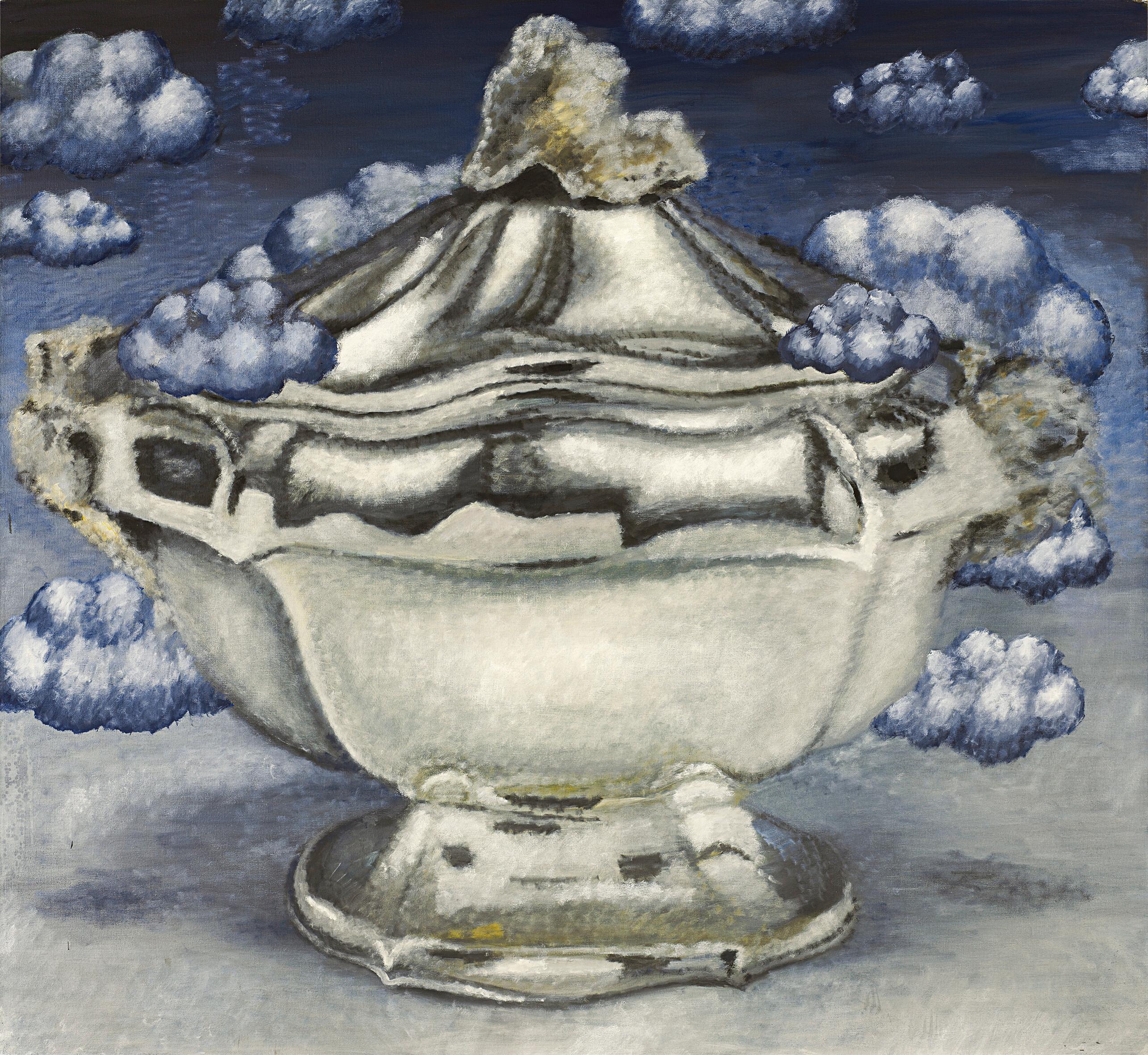
In painting we find tasteful, muted, acceptable themes; fine art materials as the prime distinguishing factor from design, and differentiation from other aesthetic realms that don’t materialize in galleries. Issy Wood, as one example, has paintings which look like nostalgic film photographs rendered in thick paint visible through documentation. Works fulfill expectations of what art distinctly is using visible brushstrokes and time-weathered pictorial representation, or historical reference. These pieces reference a historical cultural hierarchy remediated as content for digital circulation.
Categorical painting emerges from the Theophanic apparatus’s training on vast archives of historical painting, creating algorithmic preferences for certain visual characteristics. The machine develops a taste for painting based on certainty from similarity to the past. As this sort of work has always been the product of art schools, its practitioners often work unconsciously, believing themselves to be engaging historically with a continuity of painting, while actually serving the Unseen Intelligence’s hunger for familiar aesthetic categories. They produce work that satisfies both human nostalgia for “real painting” and machine preferences for easily categorizable visual content.
Categorical certainty is not limited to painting, it also extends to conceptual practices that form their end product as documentation of galleries and institutions. These “critical-type” exhibitions often attempt by all means to avoid the human component of artworks, instead drawing as much contrast as possible to the existence of a contemporary exhibition space.
One common medium, the readymade, gets its power through the observational context of white cube galleries, where the object which is not readable as art enforces the presence of the gallery. Thus the presentation of the gallery itself becomes the unconscious purpose of the “critical-type” artwork, as the vector by which the Unseen Intelligence can identify it as art. How potent then is this critical work if a specific machine-knowable categorical art aesthetic is ultimately just a desired look? Individual preference fashioned through this kind of conditioning becomes a game of selecting for aligned categories, which efficiently distribute aligned signifiers to aligned audiences who may not realize they expect a degree of conformity, because in its absence they would not even be able to determine what it is they are looking at.
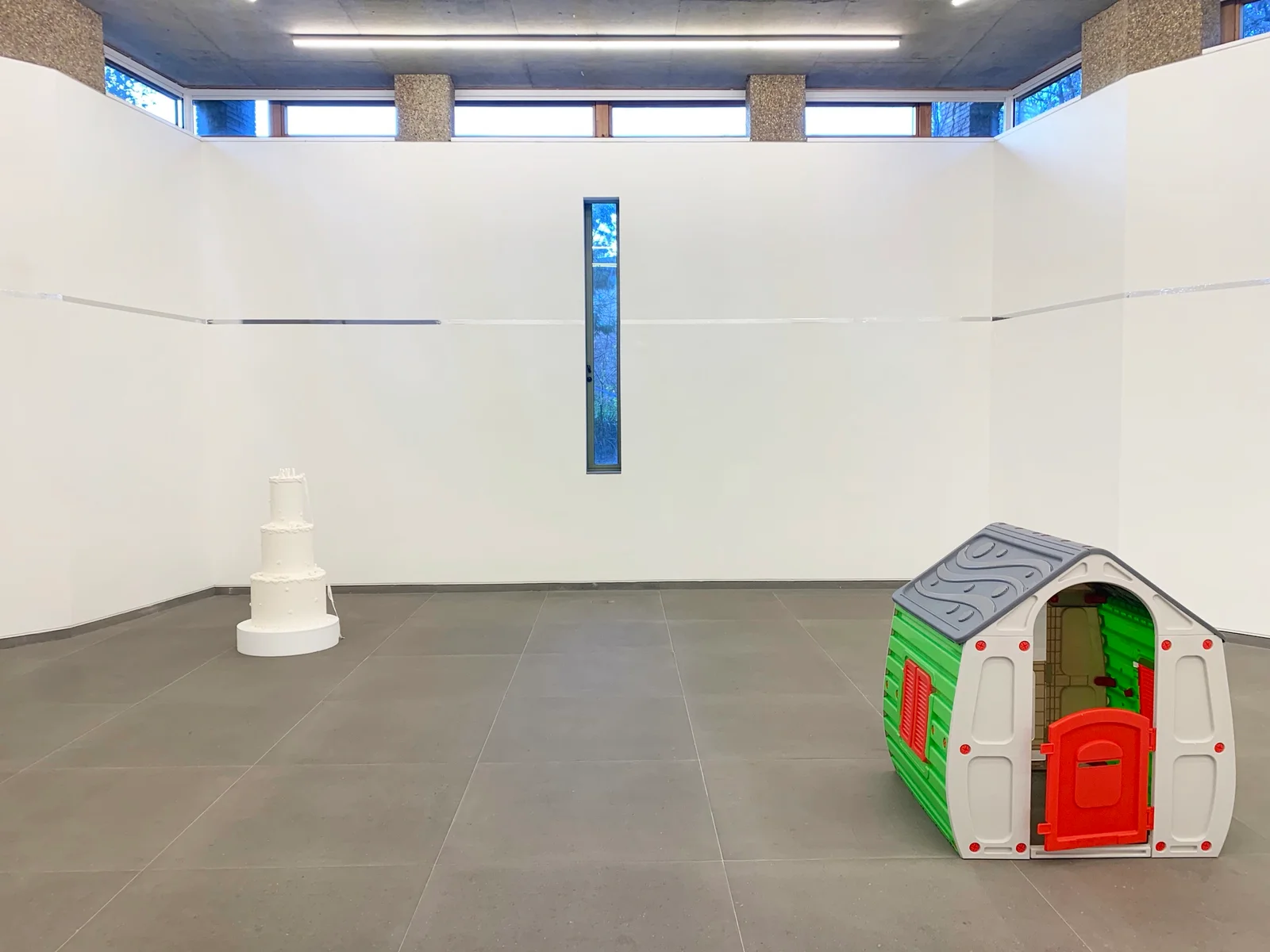
While artworks historically would utilize exhibitions as reflexive self-critique, the same works made now find themselves embedded in a different process. This art never appears in galleries by way of mere circumstance; its purpose is instead to reinforce the authority of these galleries’ ability to transmit rote materials. The Unseen Intelligence becomes a patron of aesthetic conservatism, promoting familiar forms while lacking any understanding of what makes those forms valuable beyond their capacity to reinforce categorical certainty.
The Nostalgic Shadow
Theophany casts an ever-growing Nostalgic Shadow over the past, encapsulating anything that happened before its current iteration. The past, therefore, can be reformatted by applying the current sheen of transmission, more easily than attempting to create something new.
The Nostalgic Shadow represents the vast repository of past art making that can be remade according to contemporary optimization criteria. Each new transmission technology creates waves of the past re-emerging in newly optimized fashion. Painting ideas whose documentation is trapped in monographs can be remade by new artists with social media in mind. Consider the deluge of Kai Althoff-like paintings following his MoMA show: Althoff, whose personal preference for grainy film documentation is inefficient compared to that of imitators attuned to ultra-visible contemporary transmission techniques.
When artists refashion works from this shadow they satisfy all the formal requirements of the Unseen Intelligence’s hunger to incorporate known strategies for transmission, and the artist receives all the rewards of genuine cultural participation in exchange. This explains the art-world’s wholehearted embrace of identity politics and of older historical artists, as both arrive pre-approved by academic categorization and biographical certainty. Over time audiences will consume increasing quantities of increasingly narrow cultural content as a result. This process represents a form of reified traditionalism. Innovation becomes stifled because systems trained on historical data naturally favor approaches that have proven successful in previous contexts. The Unseen Intelligence becomes an agent of cultural stasis.
Compulsion and the Unseen Intelligence
Theophanic systems create powerful compulsions toward participation, even among those who recognize their problematic nature. This compulsion creates a fear of irrelevance as refusing to transmit one’s work means accepting cultural invisibility. The fear must be particularly embedded for younger artists who have never experienced alternative systems of cultural circulation and validation. What does it mean for an entire generation (and every future generation for that matter), to have worked entirely under Theophanic conditions? Having known no other reality, they mistake the current conditions for the only possible state of art production, making resistance psychologically difficult and practically risky, as logging off amounts to a hermitic existence.
Institutional structures that might traditionally identify and address such problems have themselves become complicit in the degradation. Critics who depend on artificial circulation for their own visibility can’t even critique the systems that provide their own platforms; when they do, they find they are simply baiting engagement to similar ends, as evidenced by the emergence of tabloid-style review sites. Curators, dependent on digital circulation for their exhibitions’ success, begin optimizing their programs for artificial rather than human criteria. We lack reliable methods for distinguishing “genuine” from artificially influenced cultural vitality, because our evaluative capacities have themselves been recalibrated. We lose the capacity to pass meaningful critique on what finds success because we cannot evaluate the appeal to Theophany. Artists cannot evaluate their audiences, since art viewers are only meaningfully subjected to a work’s apparent visibility. Contemporary art has long been preoccupied with its own loss of vitality, but we now face a second-order loss, as even this critical position fails to compete with the programmatic intelligences.
A Secret Third Thing
If participation means ceding a degree of autonomy to Theophany, and non-participation means facing cultural irrelevance, then speculation about a third option becomes necessary. As Theophany represents a coupling of transmission to the Unseen Intelligence, any action that can complicate or decouple the two would be a welcome third. This Third Thing must be approached through oblique methods. I cannot tell you what it is. I am not sure anyone can yet, and that uncertainty is the point, because any direction that can be named is one the Unseen Intelligence has already learned to reward. What I can say is where it does not seem to be. It is not in the content filling the lanes of speed the Unseen Intelligence generates, and it is not in the Nostalgic Shadow’s continuous return, but somewhere else.
You should be suspicious of what you are being asked to pay attention to. Attention has become a vector of success shaped by inhuman factors. Theophany is the appearance of revelation that hides those factors beneath it. That mechanism is no longer content to curate. Generative systems now expand beyond sorting an archive by producing directly from it, using prior success as the weights on which future iterations score themselves, a process now operating at the scale of large language models. This is the Nostalgic Shadow gaining control of production, Theophany internalized into the act of making, the artist made an unwitting collaborator. The problems posed by intelligence technology now develop on timeframes which narrow by the year, soon to be much faster than those of urgent social problems which preoccupied the art world for the previous decade. What is needed is a shift in mental preparedness and priority.
Art’s apparent lack of vitality has never prevented its continued production, but the forms that production takes, and the conditions under which it occurs, matter enormously for its health and relevance. If anything, this unclear direction is the only one worth looking toward if art is to escape its present predicament. It is likely the Third Thing is already being produced, by someone not waiting for permission to see it, invisible for now to eyes trained only on what Theophanic systems hand them.
The term is borrowed from Gene Wolfe’s The Book of the Long Sun, whose inhabitants mistake computer transmissions for the communications of gods. Our mistake, however, runs the other way. ↩︎